For mat rental and cleaning service providers, keeping track of inventory has never been a simple task. Mats move constantly—from warehouses to delivery trucks, from customer sites to washing facilities, and back again. Along the way, they get misplaced, damaged, or simply lost. And when a mat goes missing, it’s not just a replacement cost—it’s a missed rental opportunity, a delayed delivery, and an unhappy customer.
The Real Cost of Manual Tracking
Many mat service businesses still rely on barcodes, spreadsheets, or manual logs to track their inventory. These methods are not only labor-intensive—they’re inherently unreliable. A worker scanning a barcode might miss a tag, enter the wrong number, or forget to log a return altogether. Over time, these small errors accumulate into big problems: inaccurate inventory counts, misplaced mats, and billing disputes with customers.
Industry data shows that rental companies lose an average of 4–7% of their small to medium-sized inventory annually due to tracking vulnerabilities. For a mat rental operation with thousands of units in circulation, that adds up to significant financial losses every year.

How RFID Changes the Game
RFID technology uses electromagnetic fields to automatically identify and track tagged objects. Unlike barcodes, which require line-of-sight scanning, RFID tags can be read in bulk and from a distance—meaning an entire truckload of mats can be inventoried in seconds rather than hours.
For mat rental providers, this translates into several concrete benefits:
Real-time inventory visibility. Every RFID-tagged mat becomes a digital asset with a unique identity. Its location, service history, and status can be tracked instantly. No more guessing whether a mat is in the wash, on a truck, or sitting at a customer’s site.
Faster check-in and check-out. Manual processing is one of the biggest bottlenecks in mat rental operations. RFID automates the entire workflow—mats are identified and recorded the moment they pass through a reader, eliminating manual data entry and reducing processing time dramatically.
Fewer lost mats. When every mat has a digital footprint, misplaced items are far easier to locate. And when mats do go missing, the system provides a clear audit trail, helping operators identify where and when the loss occurred.
Better customer service. With accurate tracking, providers can ensure that customers always receive the right mats at the right time. Clean, intact mats arrive on schedule—and when a customer needs a replacement, it can be dispatched without delay.
Sustainability gains. RFID enables mats to be serviced only when needed, reducing unnecessary washing, extending product life, and cutting waste.
Choosing the Right Tag: A Cautionary Tale
Not all RFID tags are created equal—and choosing the wrong one can cause more problems than it solves.
One established mat rental provider learned this the hard way. As their business grew, they turned to RFID to get their inventory under control. But the rigid silicone tags they initially chose turned out to be a poor fit. Over time, the tags pierced through the mats, causing visible damage that led to costly replacements and frustrated customers.
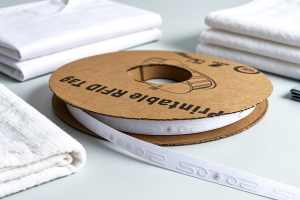
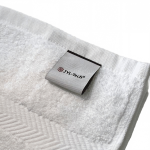
The solution came when they switched to a flexible fabric-based RFID tag designed specifically for demanding industrial environments. Unlike rigid alternatives, this tag could be vulcanized directly into the mat during manufacturing, becoming an invisible part of the product itself. No added bulk. No weak points. No damage to the mats. And full tracking capability throughout the mat’s entire service life.
What This Means for the Industry
The mat rental and cleaning industry is under constant pressure to do more with less—more mats tracked, more customers served, less waste, fewer errors. RFID offers a clear path forward. It replaces guesswork with data, manual labor with automation, and reactive problem-solving with proactive management.
For providers still relying on manual tracking methods, the gap between where they are and where they could be is widening. Early adopters are already seeing the returns—lower replacement costs, faster turnaround times, and stronger customer relationships.
The question isn’t whether RFID will become the industry standard. It’s whether your business will be ready when it does.