Every uniform rental manager knows the feeling: you order a thousand shirts, and six months later you’re ordering hundreds more just to keep up. The numbers don‘t add up. You know you didn’t use that many. But somehow, the inventory keeps shrinking.
It‘s not theft. It’s not even carelessness—most of the time. It‘s just the reality of running a business where clothes move constantly. Employees take them home. Some wash their own uniforms (which, in healthcare, is a hygiene nightmare). Others leave the company and take the workwear with them. And in the chaos of daily operations, dozens of garments simply fall through the cracks.
The Real Problem: Manual Tracking Doesn’t Work
For decades, uniform rental companies have relied on barcodes, spreadsheets, and handwritten logs to track inventory. These methods are slow, easy to mess up, and nearly impossible to scale. A worker scanning a barcode might miss a tag, type the wrong number, or skip a batch entirely. Over time, those small errors turn into big losses.
In healthcare, the stakes are even higher. Staff uniforms need to be washed at specific temperatures with specific detergents to meet hygiene standards. When employees wash their own scrubs at home, those standards go out the window. Without a way to link each garment to a specific person, there‘s no accountability. And without accountability, the losses just keep adding up.
What Actually Happens When You Switch to RFID

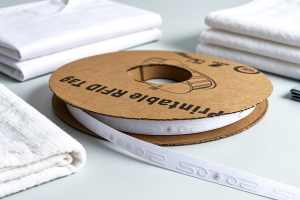
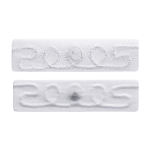
Radio-frequency identification (RFID) chips—tiny devices encased in durable, washable tags sewn into each garment—change the entire equation. Automated readers at intake, sorting, washing, and dispatch points log every item automatically. No scanning, no typing, no human error.
The result is a clear, digital record of every uniform’s journey: when it arrived, when it was washed, when it was sent out, and where it is now. That data doesn‘t just stop losses—it exposes them. You can see exactly which garments are missing, who was responsible, and where they likely went.
Four Ways RFID Actually Helps
1. You finally know what you own.
Real-time inventory counts that are actually accurate. No more guessing what’s in the wash, what‘s on the truck, and what’s sitting in someone‘s locker.
2. Losses drop—fast.
When every garment is tied to a specific employee or department, people start taking responsibility. The mysterious disappearances slow down and eventually stop.
3. You stop over-ordering.
With accurate lifecycle data, you know exactly when a shirt needs replacing—not because the stack looks low, but because the numbers tell you. Less waste, less spending.
4. Garments last longer.
The system stores care instructions for each item. If a dry-clean-only jacket accidentally heads toward a water wash, the reader flags it immediately. Proper care means longer life and fewer replacements.
The Industry Is Moving—Don‘t Get Left Behind
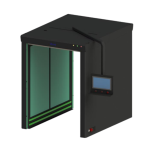
Hospitals, hotels, and industrial laundries across the U.S. and Europe are already making the switch. Smart cabinets, automated portals, and handheld readers are becoming standard equipment. The technology is proven, the chips survive hundreds of wash cycles, and the ROI is visible within the first few months.
Uniform rental isn’t a low-tech business anymore. The question isn‘t whether RFID will become the norm. It’s whether you‘ll adopt it before your competitors do.